
Tax Strategy Playbook — Keep More of What You Earn
The complete guide to real estate tax strategies for high-income W2 investors. 8 chapters covering depreciation, cost segregation, 1031 exchanges, REPS, entity structuring, and the latest OBBBA bonus depreciation rules.
Everything You Need to Minimize Your Tax Burden
From depreciation basics to advanced entity structuring — the tax playbook built specifically for real estate investors with W2 income.
Tax Strategy Playbook
The complete tax playbook for real estate investors. From depreciation basics to advanced entity structuring and the latest OBBBA bonus depreciation rules.
- ✓ 8 comprehensive chapters
- ✓ Depreciation deep dive (straight-line & accelerated)
- ✓ Cost segregation study walkthrough
- ✓ 1031 exchange mechanics & timelines
- ✓ Passive activity rules & REPS qualification
- ✓ Entity structuring (LLC, S-Corp, LP)
- ✓ OBBBA bonus depreciation (2025+ rules)
- ✓ Real calculation examples throughout
What’s Inside
8 chapters that build on each other — from foundational concepts to advanced strategies.
Preview
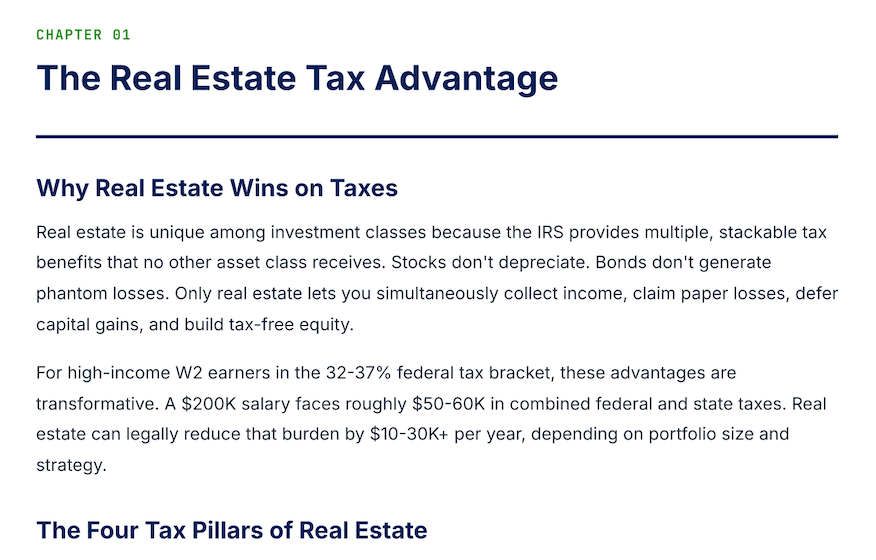
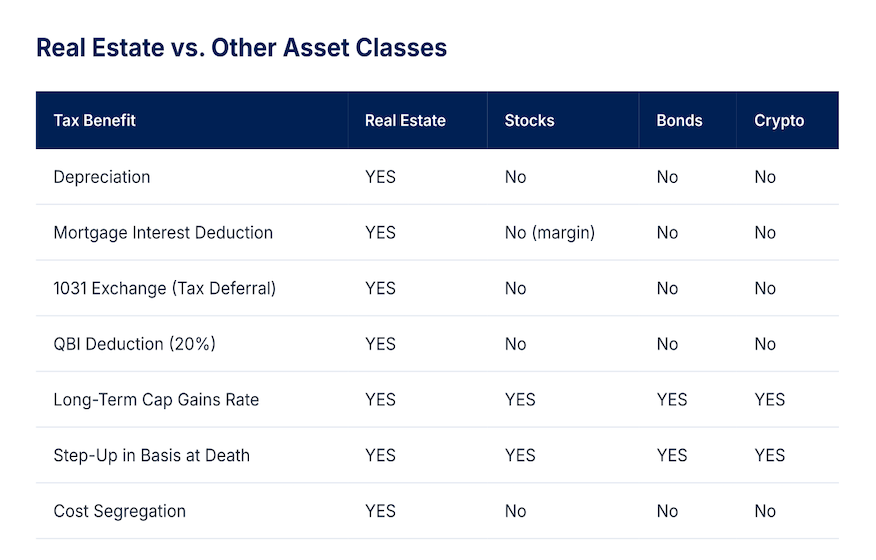
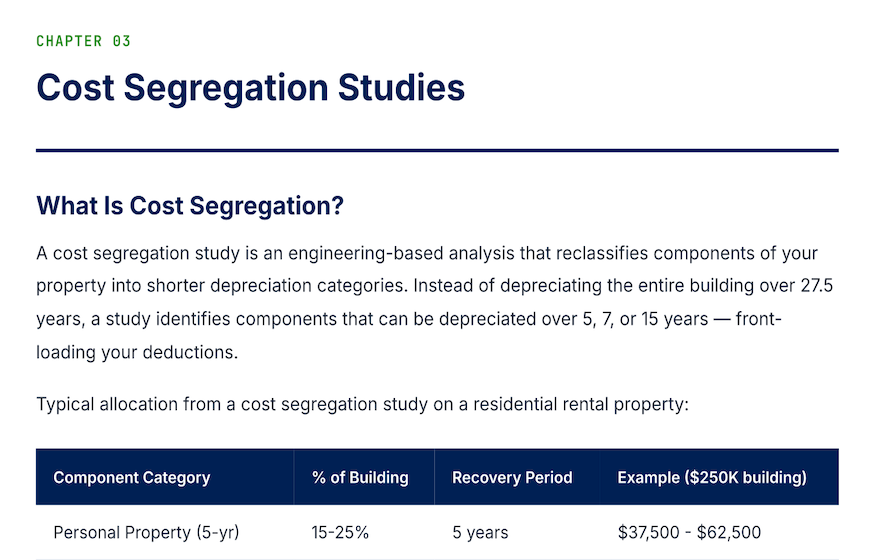
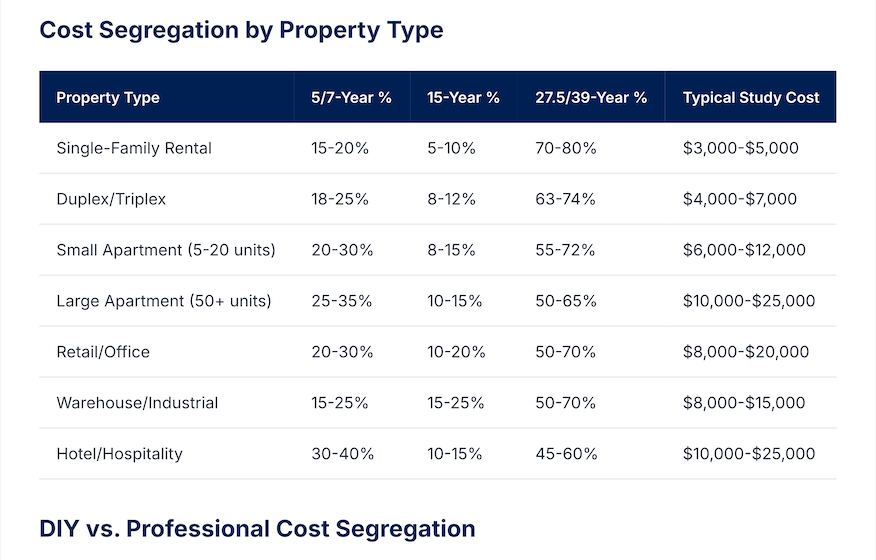
Clean layout with calculation examples, comparison tables, and actionable checklists.
How to Use the Tax Strategy Playbook
Read it once to understand the landscape. Reference it every tax season.
Learn the Strategies
Each chapter builds on the last — from depreciation basics through advanced entity structuring and the latest bonus depreciation rules.
Run Your Numbers
Use the real calculation examples throughout to estimate your own tax savings. See exactly how cost seg, 1031 exchanges, and REPS apply to your situation.
Build Your Team
Chapter 8 shows you how to find a CPA who specializes in real estate investing — the most important hire you’ll make.
Built for W2 Earners Who Want to Keep More
High-income W2 earners in the 32-37% bracket who want to use real estate to legally reduce their tax burden by $10K-$30K+ per year
Investors considering cost segregation or 1031 exchanges who want to understand the mechanics, costs, and ROI before committing
Anyone confused by passive activity rules and REPS qualification — Chapter 5 breaks down exactly who qualifies and how
Investors structuring LLCs or S-Corps who need clarity on which entity type is right for their portfolio and liability protection
Frequently Asked Questions
Q What format is the Tax Strategy Playbook?
Instant PDF download. You can read it on any device — computer, tablet, or phone. Print-friendly formatting included.
Q Is this tax advice?
No. This is an educational guide that explains real estate tax strategies in plain language with real examples. It is not professional tax advice. Always consult a qualified CPA for your specific situation — and Chapter 8 shows you how to find one.
Q Is it updated for 2025?
Yes. The playbook includes the OBBBA (One Big Beautiful Bill Act) changes signed into law in 2025 — including the permanent restoration of 100% bonus depreciation and increased Section 179 limits ($2.5M).
Q What’s REPS and why does it matter?
Real Estate Professional Status (REPS) lets you deduct rental losses against your W2 income without limitation. Most high-income W2 earners can’t qualify themselves, but a non-working spouse often can. Chapter 5 covers every detail.
Q Do I need to own investment property to benefit from this?
No. If you’re planning to buy your first investment property, reading this before you buy will help you structure the deal for maximum tax benefit from day one.
Q Is there a refund policy?
Because this is a digital product, all sales are final. But if you run into any issues, email contact@theengineerinvestor.co and we’ll make it right.
You Might Also Like
W2-to-Investor Blueprint
The step-by-step guide for high-income W2 earners building wealth through rental real estate.
Portfolio Scaling Roadmap
Strategic guide to scaling from 1 to 10+ properties. Covers BRRRR, financing, delegation, and portfolio management.
Rental Deal Analyzer
Model cash flow, cap rate, cash-on-cash return, and DSCR for any rental property.
One Tax Strategy Can Save You More Than This Playbook Costs
A single cost segregation study can save $20K-$80K in Year 1. This $49 playbook shows you exactly how to capture every deduction.